


Treating dental caries involves removing the affected part of the tooth and restoring it to prevent further damage and to restore normal function. The treatment process depends on the severity of the caries and its stage.
There are several types of dental caries, which can be classified according to their location on the tooth and stage of development. Each type of cavity requires specific treatment depending on how advanced the damage to the tooth structure is. Here are the main types of dental caries:
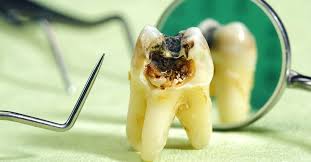
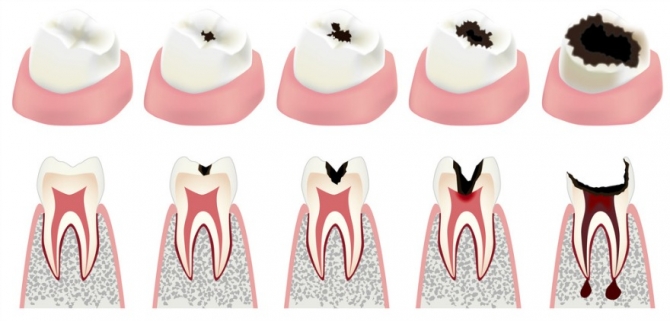
Cavities can affect all layers of the tooth. There are five main stages of dental caries:

Preventing tooth decay is possible through proper oral hygiene (brushing twice a day, using dental floss), regular dental check-ups, and a balanced diet low in sugar. Fluoride and dental sealants can be additional measures to protect teeth against decay.
Treating cavities in time is essential to prevent more serious dental problems and to maintain oral health.
Caries can begin without obvious symptoms, but as it develops, you may feel sensitivity to sweet, cold or hot foods, pain when chewing, or notice brown or black spots on your teeth. The dentist can also detect early-stage caries during a routine check-up or through X-rays.
Standard treatment for a cavity involves removing the affected part of the tooth and filling the cavity with a restorative material. In more severe cases, when the decay has penetrated deeper, more complex treatments may be necessary, such as root canal treatment or placing a crown.
Treatment for a regular cavity generally takes between 40-60 minutes, depending on the size and location of the caries. If root canal treatment or a dental crown is needed, it may take longer and involve several visits.
The dentist will use local anesthesia to numb the area and make sure you feel no pain during the procedure. After the anesthesia wears off, you may feel slight discomfort, but this can be managed with ordinary painkillers.
Oral hygiene is the key to preventing cavities. Brush your teeth twice a day, use dental floss daily, and rinse your mouth with mouthwash. Also, visit the dentist for regular checkups and professional cleanings, and avoid foods high in sugar or starch.
Root canal treatment is necessary only if the decay is very advanced and has affected the nerve or pulp of the tooth. In this case, the tooth cannot be saved with just a filling, and root canal treatment is needed to eliminate the infection and preserve the tooth.
Untreated caries will worsen over time. It can progress to deeper layers of the tooth, causing severe pain, infections, and ultimately may require extraction or more complex treatments, such as root canal treatment.
Cavities do not heal on their own. Once the enamel is damaged, it will not repair itself without a dentist's intervention. However, in the early stages of a cavity (white demineralization spots), fluoride can help stop the progression of the caries.