


Endodontic treatment, also known as “root canal treatment” or “nerve removal,” is the most common dental procedure, absolutely necessary to save teeth in extreme cases of infection.
If you experience any of the symptoms below, we recommend that you consult your dentist:
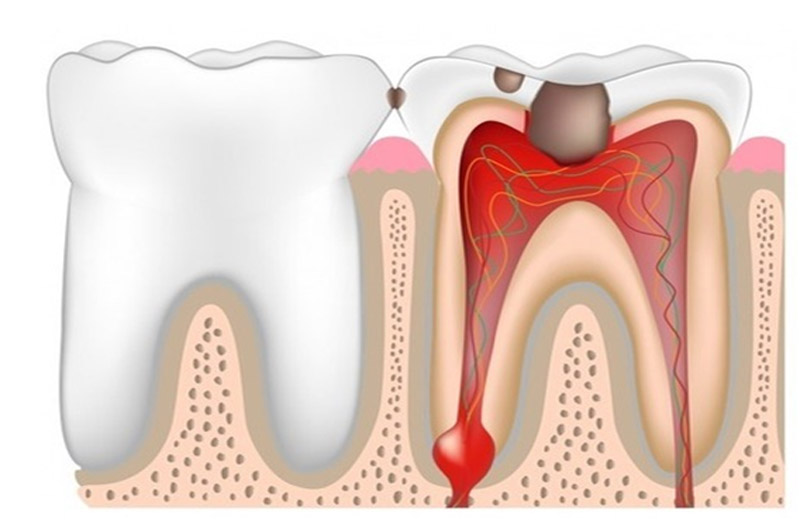
Regardless of the nature of the harmful agent (microbial, thermal, chemical), the dental pulp will defend itself through a tissue defense reaction called inflammation (dental pulpitis).
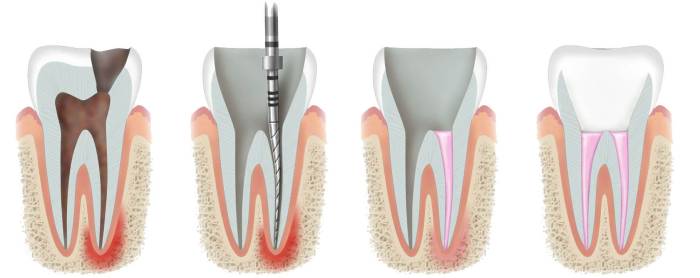
A proper endodontic treatment takes place over several stages, under local anesthesia:
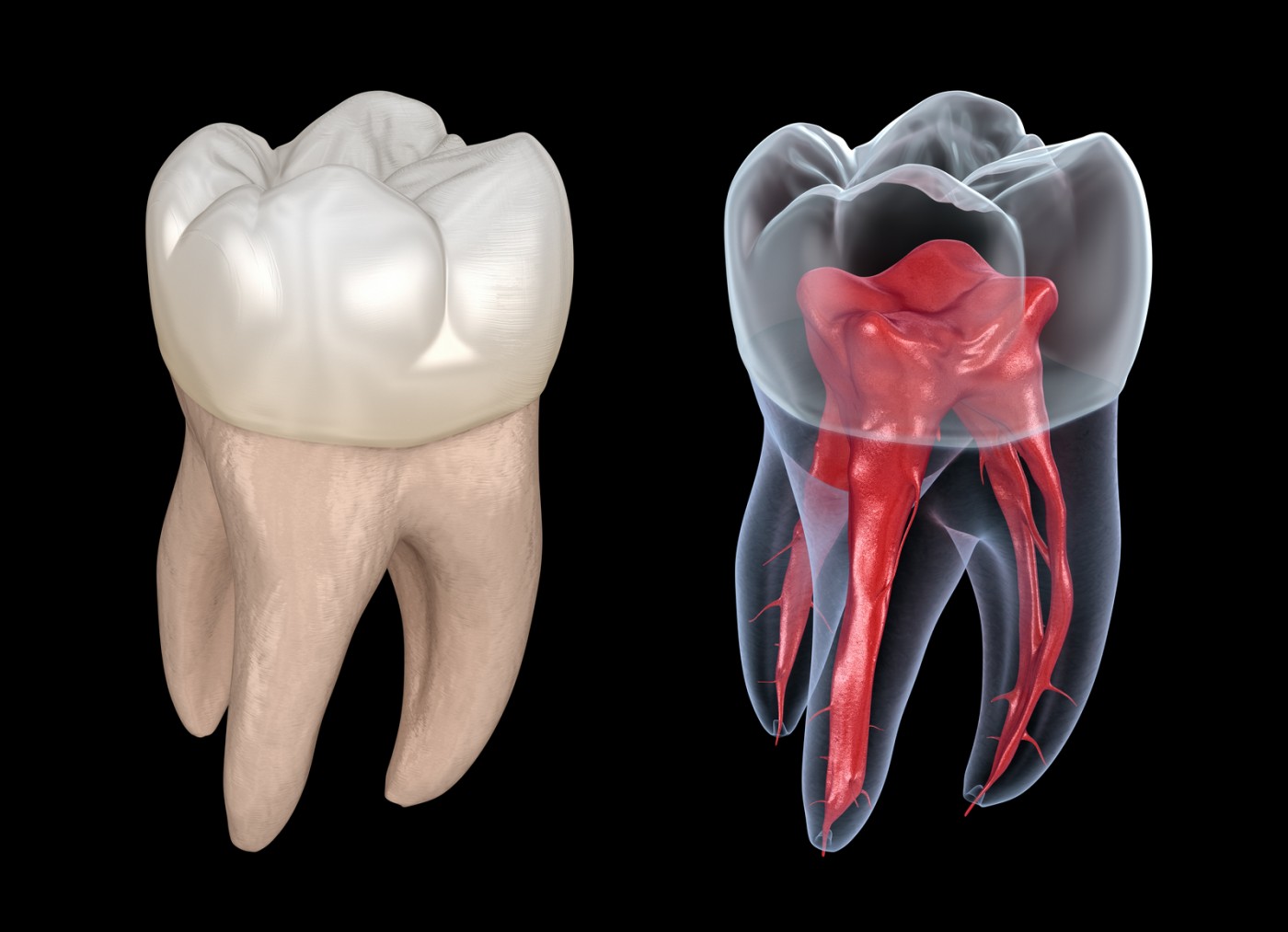
Endodontic treatment is necessary when the pulp of the tooth (its interior) becomes inflamed. This pulp contains the nerves and blood vessels that keep the tooth alive. Root canal treatment involves cleaning the canals inside the tooth to remove the infection (and the pain you are experiencing).
The dental pulp becomes inflamed either due to advanced, untreated caries or due to trauma (impact) to the teeth.
No. Thanks to modern local anesthesia, endodontic treatment is, in most cases, completely painless. The patient may only feel slight pressure during the procedure. After treatment, mild discomfort may occur for a few days, which can be managed with medication recommended by the doctor.
The duration of the treatment depends on the complexity of the case and the number of root canals. In some situations, the treatment can be completed in a single session, while in more complex cases two or more visits are required.
An untreated infection does not go away on its own. It can progress, destroying the bone around the root, causing the formation of an abscess, and ultimately leading to tooth loss. In some cases, the infection can also spread to neighboring tissues.
In many cases, yes. However, if the tooth is severely damaged, fractured below the gum line, or can no longer be safely restored, the doctor may recommend extraction. The decision is always made after clinical and radiological examination.
After the treatment is completed, the tooth must be restored to regain its function and strength. Depending on the degree of damage, the doctor may recommend a filling or a dental crown.
Endodontically treated teeth become more fragile because they have lost an important part of their structure and are no longer nourished by the dental pulp. A crown protects the tooth against fractures and extends its lifespan.
If the treatment is performed correctly and the patient follows the doctor's recommendations regarding oral hygiene and periodic check-ups, an endodontically treated tooth can function for many years, sometimes even a lifetime.
Not in all cases. Endodontic treatment eliminates the cause of the infection by cleaning the root canals. Antibiotics are prescribed only in certain situations, such as extensive infections or the presence of general symptoms, and only on the doctor's recommendation.
Yes, but it is recommended to wait until the effect of the anesthesia wears off. If the tooth has a temporary filling, avoid hard or sticky foods until the treatment is completed.
The best method of prevention is treating caries at early stages and having regular dental check-ups every six months. Also, proper oral hygiene and avoiding dental trauma significantly reduce the risk of pulp infections.
In most situations, yes. Preserving the natural tooth is always the first option, as it provides the best chewing function and helps maintain the health of the entire dentition. Extraction is recommended only when the tooth can no longer be saved.