


Good oral health begins in childhood. Baby teeth play a crucial role in the healthy development of the jaws and bite, as well as in maintaining space for the permanent teeth. Preventing dental problems from an early age can help avoid long-term complications and promote a positive attitude toward oral hygiene.
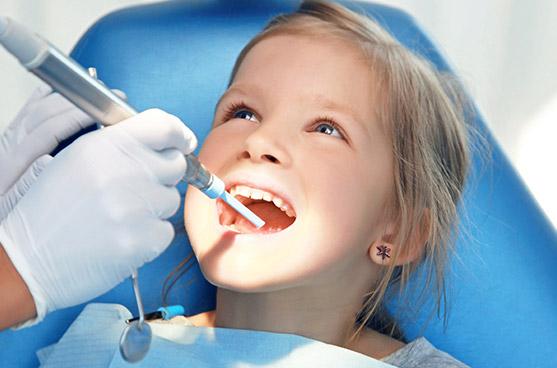
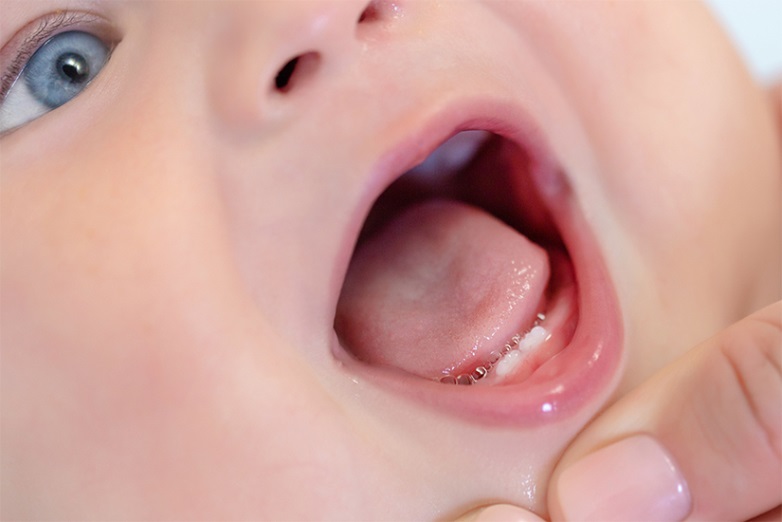
Baby teeth begin developing as early as the embryonic stage and become visible in the mouth after birth, when the child is a baby. They will change and be replaced by permanent teeth, but in the absence of permanent teeth, they can remain functional for many years (very rarely).
The primary (baby) dentition consists of 20 teeth, namely:
The buds of these teeth begin to form during pregnancy, from the 6th week of the embryo. The process starts with the front area (incisors) and then the lateral area (molars).
The teeth continue to develop until they erupt into the oral cavity. At that point, they have the same structure as permanent teeth: they are formed of a crown and a complete root and have a nerve (dental pulp).
Baby teeth play an essential role in the overall oral health of the child. They help with proper chewing of food, allow for proper development of the jaw muscles, and contribute to clarity of speech. Untreated dental problems can cause pain, infections, and can affect the child’s overall oral health.
Baby teeth serve as a guide for the correct eruption of permanent teeth. When a baby tooth is lost prematurely due to untreated cavities or other conditions, the adjacent teeth may shift to fill the empty space, which can lead to alignment problems for the permanent teeth, requiring orthodontic treatment.
Untreated cavities in baby teeth can develop into severe infections, such as a dental abscess, which can affect not only the tooth in question but also the developing permanent teeth. Severe infections can cause intense pain, fever, and may require complex treatments, such as extractions or surgery.
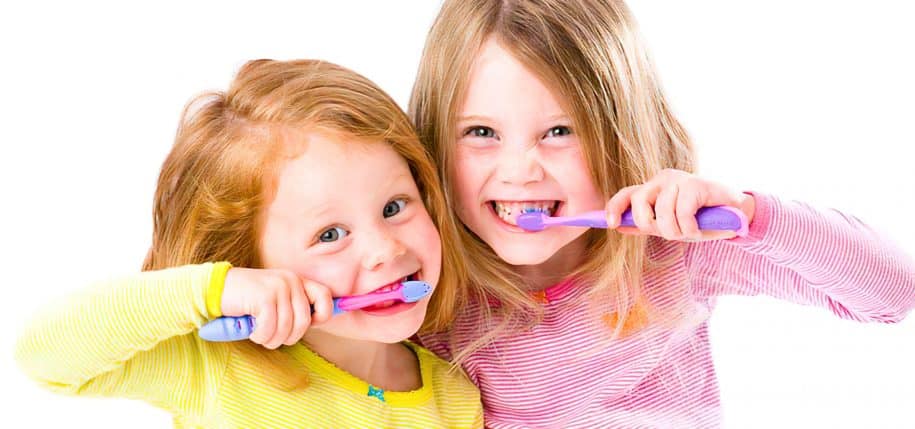
Prompt treatment of baby teeth is crucial to ensure the healthy development of permanent teeth, to prevent pain and further complications, and to encourage long-term oral hygiene habits. Regular dental visits and timely treatment of dental problems help maintain the child’s oral and overall health, providing a solid foundation for a healthy life.
Mixed dentition (between ages 6-12) – the period during which baby teeth are replaced by permanent ones.
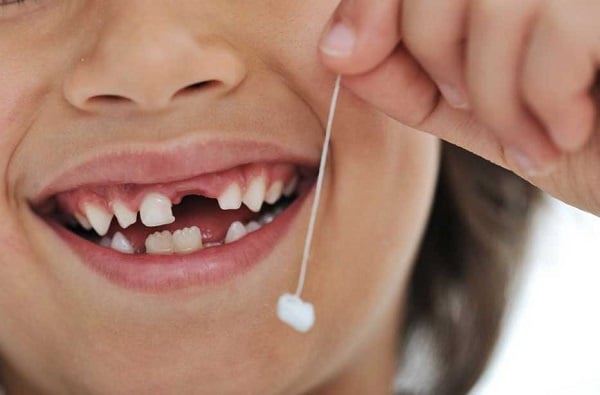
In most cases, baby teeth will fall out on their own. It is not recommended to extract them before their natural shedding age, because premature loss of primary teeth will lead to irregular eruption of permanent teeth, so they need to remain in place until they become mobile, in order to preserve space on the dental arch. When they start to become loose, slight bleeding may occur during brushing, but it is recommended to maintain good oral hygiene, including in the area around loose baby teeth, to avoid gum inflammation.
The permanent dentition contains 32 teeth.
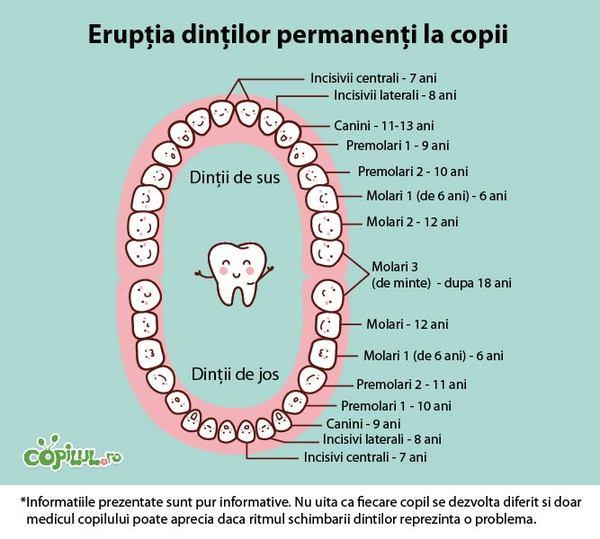
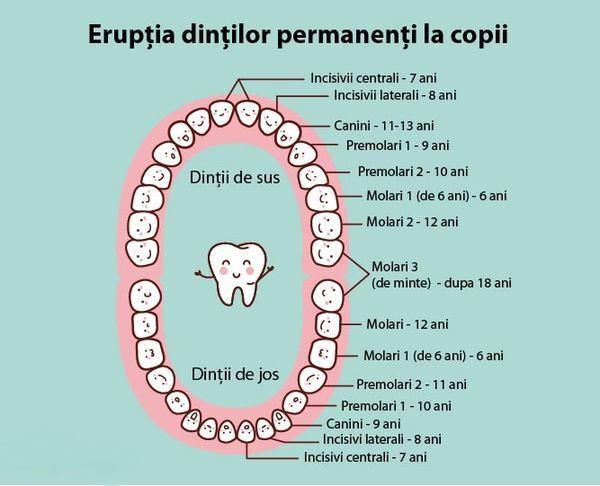
Excluding wisdom teeth, whose dental buds may or may not exist and which can erupt at any time after age 18, even at older ages, permanent teeth erupt during the following periods:
Sealing is a method of preventing dental caries. It is usually indicated for permanent teeth not affected by caries.
It consists of applying a very thin layer of fluid composite (dental sealant) on the chewing surface of the teeth, in the grooves and pits, as well as on the lingual and vestibular surfaces.
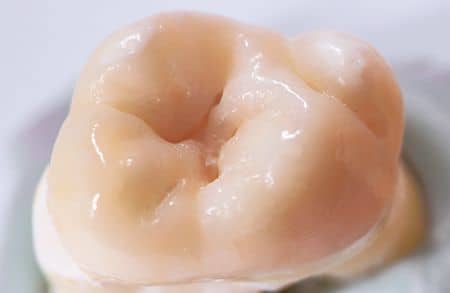
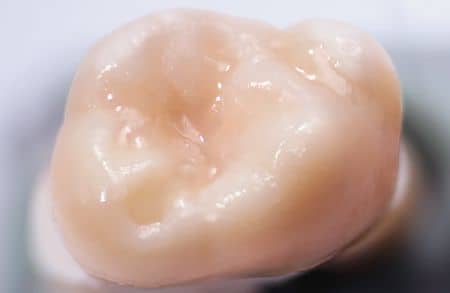
The sealant remains as a thin, tooth-colored film and acts as a barrier against the pathogens that lead to the formation of dental caries (bacterial plaque).
It is a minimally invasive method of prevention, not requiring the tooth to be ground down before application, unlike the treatment of an already formed cavity
Most sealings are recommended on children’s permanent molars that appear at ages 6 and 12.
It is most advisable for sealing to be performed before any sign of tooth decay appears, ideally within the first year after its eruption.
The sealant applied in the grooves transforms the very steep surface of the tooth into a much smoother and glossier relief, favorable for self-cleaning and much more accessible to the toothbrush, leaving food debris with nowhere to hide.
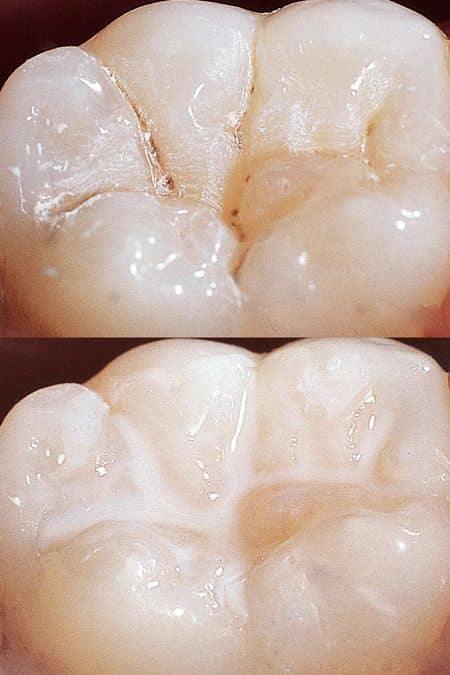
The flowable composite used as a sealant contains fluoride-based antibacterial substances that are continuously released over a long period, providing an even greater protective role and further reducing the risk of the tooth decaying.
The first dental visit is recommended around the age of 1 year or within six months of the eruption of the first tooth. This helps detect any dental problems early and familiarizes the child with the dental environment.
It is recommended that dental visits be scheduled every 6 months for routine check-ups and professional cleanings. Depending on the child's specific needs, the dentist may recommend a personalized visit schedule.
Baby teeth play a crucial role in a child's healthy development. They help with chewing, speech, and maintaining space for permanent teeth. Untreated problems with baby teeth can lead to infections, pain, and can affect the proper eruption of permanent teeth.
Prevention of tooth decay includes brushing teeth twice a day with fluoride toothpaste, using dental floss daily, limiting the consumption of sugary foods and drinks, and regular visits to the dentist for check-ups and professional cleanings. The dentist may also recommend fluoride application or dental fissure sealing.
Dental sealants are a protective resin applied to the chewing surfaces of molars and premolars to prevent the buildup of bacterial plaque and food debris in the deep fissures of the teeth. They are usually applied immediately after the eruption of the first permanent molars, around the age of 6, and the second permanent molars, around the age of 12.
Encourage your child to see the dentist visit as a positive experience. Avoid using words that could induce fear (such as “painful” or “injection”) and try to explain what is happening in a friendly, age-appropriate way. Regular visits from an early age help the child become familiar with the dental environment and develop positive habits.
Supervise your child's toothbrushing until they have enough dexterity to do it on their own, usually around the age of 6-7. Use an age-appropriate toothbrush and fluoride toothpaste. Encourage daily flossing and reduce the consumption of sugary foods and carbonated drinks.