


Tooth extraction is a common procedure in dentistry, necessary when a tooth can no longer be saved through other treatment methods. Whether it involves a deep infection, advanced decay, or teeth that lack sufficient space to erupt correctly, extraction becomes the solution to prevent complications and maintain oral health.
In some cases, extraction can be performed by alveolotomy (drilling of part of the maxillary or mandibular bone). This surgical technique is used if ankylosis of the tooth to be extracted is observed, thus avoiding fracture of the bone cortex.
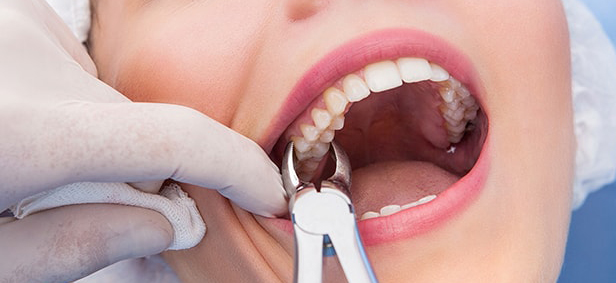

At Doctor White clinic, various types of tooth extractions can be performed, which can be classified according to the position of the tooth, the number of dental roots, the tooth’s solidity and the complexity of the procedure.
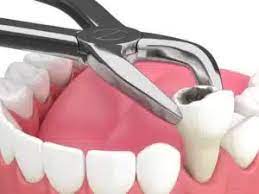
Extraction of single-rooted teeth (with a single root) is generally a simple procedure, performed under local anesthesia, using classic extraction instruments. The category of single-rooted teeth includes all front teeth (incisors and canines), together with the premolars (an exception may be the first upper premolar, which may have more than one root).
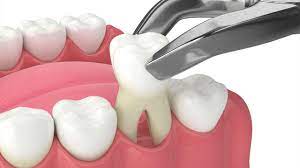
A procedure for removing teeth with more than one root, considered more complex, requiring the tooth to be sectioned into several fragments and the fragments removed one by one. The category of multi-rooted teeth includes all molars and, in some cases, the first premolar of the upper arch.
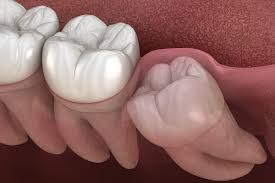
Extraction of wisdom teeth (third molars) can be performed prophylactically, when there are no complications associated with the eruption of these teeth, to avoid potential future infections, or therapeutically, when the wisdom teeth erupt incorrectly and cause pain or local infections. Compared to extractions performed on other molars, after which dental implants are recommended to replace the lost tooth, dental implants are not performed in the case of wisdom teeth.
Impacted or semi-impacted teeth are teeth that either fail to erupt on their own or erupt only partially, causing patients multiple symptoms such as toothache or infections. Complications associated with incomplete tooth eruption can be eliminated through their extraction.
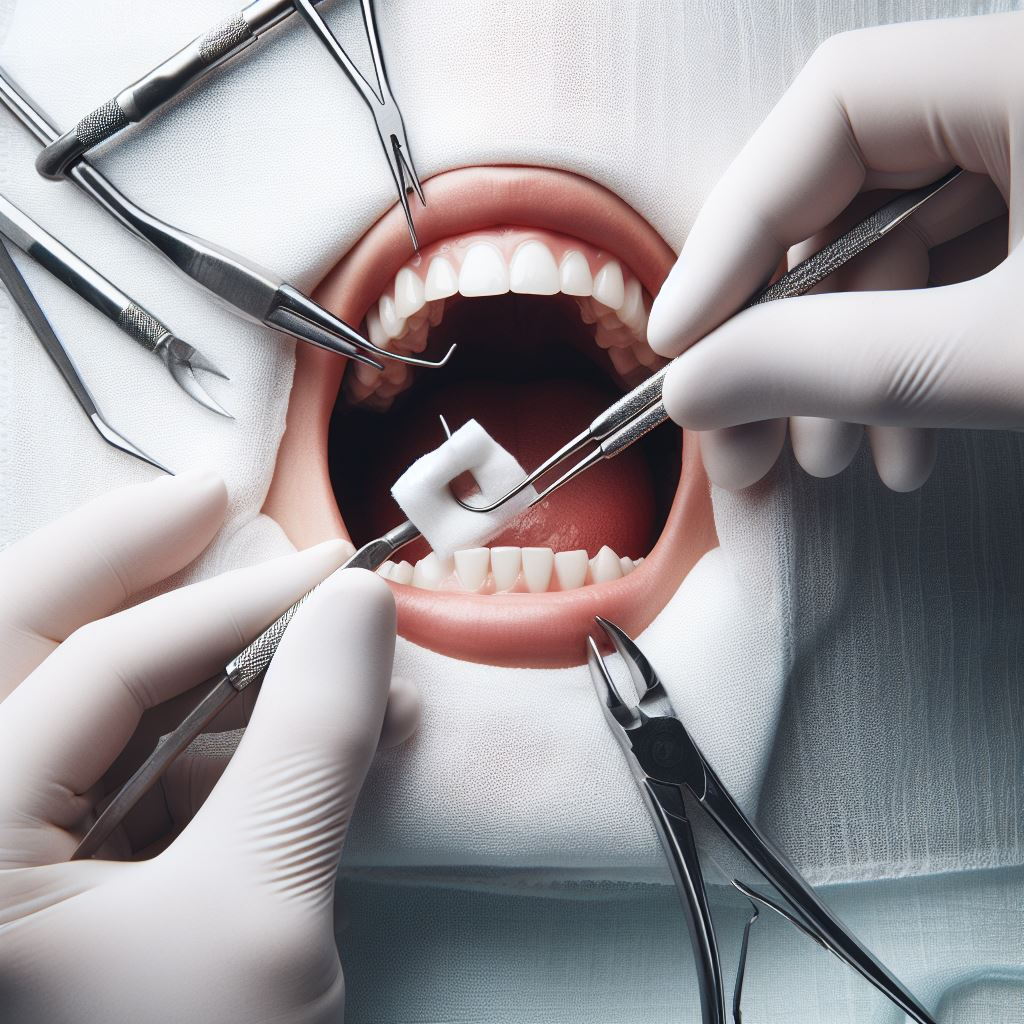
The tooth extraction procedure varies depending on the complexity of the case and can be simple or surgical. Each stage of the process is essential for the success of the procedure and the patient’s comfort.
Anesthetizing the area: The first step in a simple extraction is ensuring the patient’s comfort by anesthetizing the area where the extraction will be performed. The local anesthetic is injected into the tissues around the tooth to block pain sensations, allowing the patient to remain awake and relaxed throughout the procedure. It is important for the patient to communicate any sense of discomfort so that the anesthetic dose can be adjusted if necessary.
Loosening and removing the tooth: After the area has been anesthetized, the dentist will use specific instruments to loosen the tooth from the surrounding tissues. The dental elevator is used to create space and mobilize the tooth, while dental forceps are used to grasp and extract the tooth from the socket. The patient may feel pressure, but not pain. If the tooth is difficult to extract, additional force or special techniques may be required to ensure a complete and safe extraction.
Incisions and bone removal: In surgical extraction, access to the tooth is achieved through incisions in the gum and, if necessary, by removing the bone surrounding the tooth’s roots. This step is crucial in the case of impacted teeth or those with abnormal positions. The surgeon may use special drills to remove bone and expose the tooth’s roots, thereby facilitating extraction. The process requires precision and care to minimize impact on surrounding structures and ensure optimal healing.
Sectioning and removal of the tooth: In certain cases, the tooth cannot be extracted in one piece and needs to be sectioned into several parts. This technique is used especially for impacted wisdom teeth or teeth with multiple roots that are firmly anchored in the bone. The dentist or surgeon will use special instruments to cut the tooth into smaller sections, thereby facilitating the removal of each part individually. This approach reduces the risk of damaging surrounding tissues and allows for a more controlled and less traumatic extraction. After sectioning, each fragment is carefully removed, ensuring that the entire tooth structure has been eliminated from the socket.
Placing gauze and biting pressure: After tooth extraction, correctly applying gauze and exerting adequate pressure by biting down are essential for the formation of the blood clot. The clot protects the exposed socket and is the first step in the healing process. The patient is instructed to bite firmly but gently on the gauze to control bleeding and promote clot stabilization. It is important for the gauze to be kept in place at the extraction site for the period recommended by the doctor, usually a few hours, and to be changed if it becomes saturated with blood.
Sutures and wound closure: In cases where an incision was necessary or the extraction was more complex, sutures may be needed to close the wound. Sutures help keep the tissues in the correct position for healing and may be resorbable or may need to be removed at a follow-up visit. The dentist will provide specific instructions on caring for the sutures and the affected area to prevent infection and promote fast and effective healing.
A procedure for removing teeth with more than one root, considered more complex, requiring the tooth to be sectioned into several fragments and the fragments removed one by one. The category of multi-rooted teeth includes all molars and, in some cases, the first premolar of the upper arch.

After extraction, you should expect a feeling of pain and discomfort. Painkillers and antibiotics are recommended as needed. Blood clots form in the first 24 hours. Applying an ice pack to the face for 20-minute intervals sometimes helps. A dairy-free diet (dairy can cause fermentation in the area) is recommended for 3 days, and food and drinks should be at room temperature. Strenuous activities should be avoided on the day following the extraction.
It is not recommended to smoke, drink alcohol, or rinse your mouth vigorously in the first few days after extraction.
After extraction, the area may bleed for a few minutes or a few hours, depending on each patient’s body. If heavy bleeding occurs spontaneously a few hours after it has stopped, or the day after the extraction, you must see the doctor again.
Swelling in the area where the extraction was performed will appear shortly after the procedure; this is normal and is due to postoperative edema, which is a stage of healing.
Generally, the recovery period lasts between 5-10 days until the sutures are removed.
Sutures can be removed after 7-10 days.
Minor bleeding is normal in the first few hours after extraction. If the bleeding persists after 24 hours or becomes heavy, you should contact your dentist.
It is recommended to eat soft and cold foods in the first 24 hours. Over the following days, you can gradually introduce more solid foods, but avoid hard or crunchy foods until you feel comfortable. Generally, after 5-7 days you can return to a normal diet.
Ideally, you should avoid smoking for at least 48-72 hours after extraction. Smoking can disrupt healing and increase the risk of complications, such as dry socket.
You can start brushing your teeth the day after the extraction, but avoid the affected area so as not to disturb the blood clot. After 24 hours, you can gently rinse with salt water to keep the area clean.
Yes, swelling is common after extraction and can last a few days. Applying ice to the cheek during the first 24 hours helps reduce inflammation. If the swelling does not go down after 3 days or gets worse, consult your doctor.
It is recommended to avoid intense physical activity in the first 48 hours after extraction to prevent bleeding. After 48 hours, you can resume light activities, but gradually return to more demanding exercise.
Generally, the gums heal within about 1-2 weeks, but the underlying bone may take several months to fully recover, especially if a dental implant is to be placed.
Fever or the presence of pus indicates an infection, and you should contact your dentist immediately. These symptoms are not normal and require prompt treatment.
A slightly unpleasant taste or smell may be normal immediately after an extraction, but if it becomes persistent or intense, it could indicate an infection or a complication, such as dry socket.
The waiting time for a dental implant after an extraction varies, but it is generally recommended to wait between 3 and 6 months for complete bone healing.